
One engine rates every service.
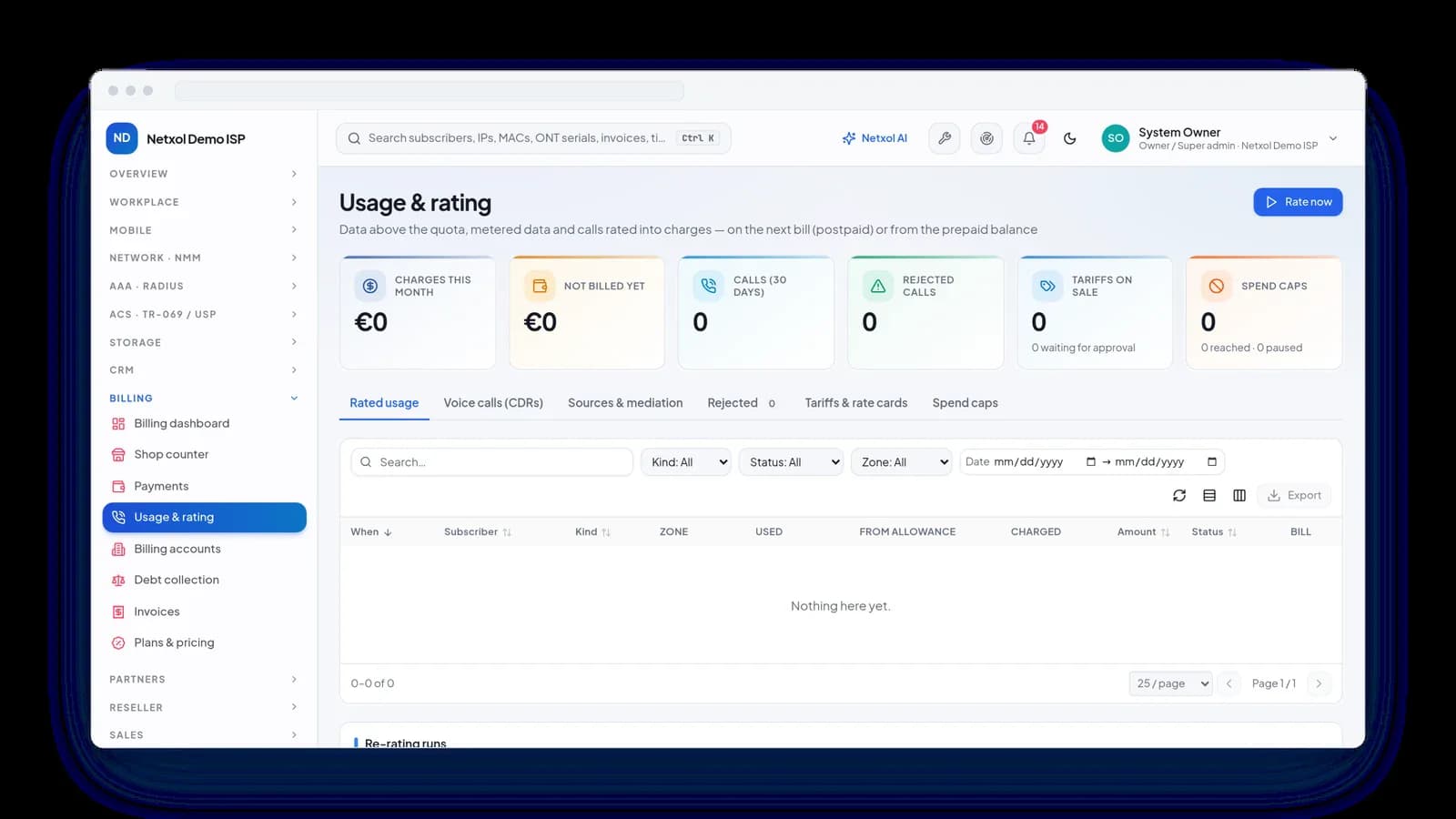
Mobile, fibre, fixed, TV and wholesale, prepaid and postpaid, all rated and billed against a single balance and a double-entry ledger that reconciles itself. One priced product for a converged bundle — not four systems stapled together.
- Real-time rating · one balance
- Prepaid + postpaid + hybrid
- CDR mediation · tariffs · ledger
Four services, four engines, one angry subscriber.
When mobile, fibre and fixed each bill on their own system, a converged bundle turns into several invoices and balances that drift apart. Usage is rated in one place and booked in another, so revenue never quite reconciles — and every new plan is a change request to a black-box vendor.
- Mobile, fibre and fixed each bill on their own engine, so a converged bundle means several invoices
- Prepaid balances and postpaid invoices live in different systems that drift apart
- Usage is rated in one place and booked in another, so revenue never quite reconciles
- Every new price plan or promotion is a change request to a black-box charging vendor
Rate, charge and book on one engine.
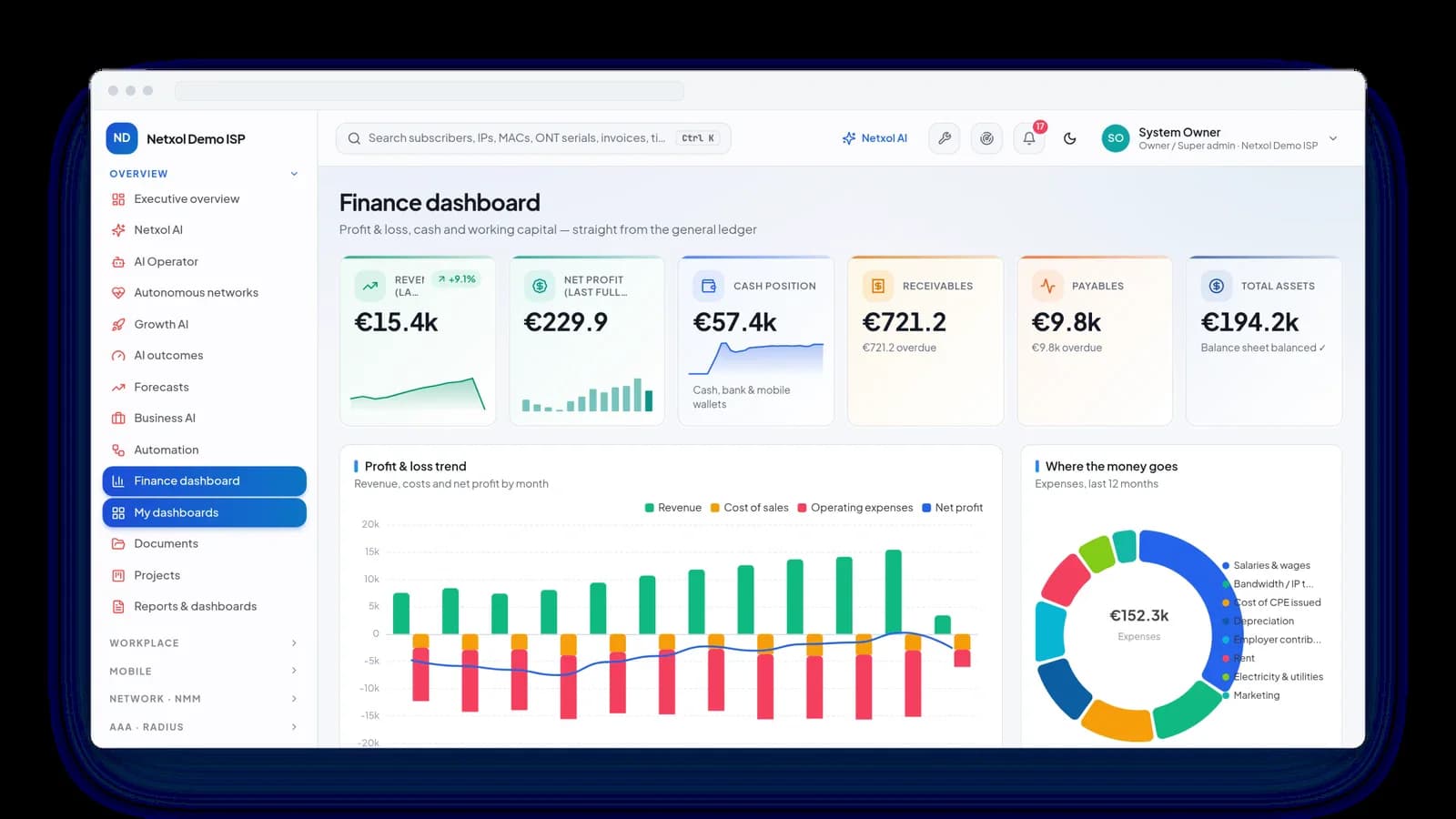
Usage is rated the moment it happens, charged against a single balance, and posted to a double-entry ledger — so billed, booked and collected always agree.
Real-time rating & charging
Rate voice, data, messaging and broadband usage the moment it happens. Balances, bundles, bonuses and fair-use thresholds stay current in real time — no overnight batch to trust.
Prepaid + postpaid in one plan
A single engine charges prepaid wallets, postpaid invoices and hybrid plans against one balance, so a subscriber on a converged bundle sees one consistent view and one bill.
Convergent across services
Mobile, FTTH, fixed, TV and voice are rated on the same engine. A quad-play bundle is one priced product, not four systems stapled together.
CDR mediation & tariffs
Ingest CDRs and usage from the network core or OLT, normalise them, rate against tariffs, and apply discounts, tiers and metered add-ons — all configurable without a vendor ticket.
Double-entry ledger & revenue assurance
Every rated event posts to a double-entry ledger, so billed, booked and collected always reconcile. Netxol AI flags leakage, mis-rated usage and unbilled events.
Dealer wallets, recharge & gateways
Recharge cards, dealer and reseller wallets, SEPA and the operator’s own Stripe, PayPal, Authorize.net or PayFast — collection flows that feed the same ledger.
What runs under convergent charging.
Rating
CDR mediation, tariffs and convergent real-time rating.
Billing
Cycles, dunning, promotions, credit notes, recharge and SEPA.
ERP & ledger
Double-entry accounting, statements and reconciliation.
Resellers & partners
Franchise, dealer and sub-dealer wallets, margins and settlements.
What finance and product teams ask.
What is convergent charging?
Convergent charging rates and bills every service — mobile voice and data, broadband, fixed, TV and voice — on one engine against a single balance, so prepaid, postpaid and hybrid plans stay consistent and a converged bundle produces one bill.
Does Netxol One rate in real time?
Yes. Usage is rated as it happens, so balances, bundles and fair-use thresholds are always current. A depleted data bundle can throttle the session and offer a top-up immediately, without an overnight batch.
Can one plan mix prepaid and postpaid?
Yes. A single engine charges prepaid wallets and postpaid invoices against one balance, so hybrid plans are a configuration, not a second system.
How does Netxol One keep revenue reconciled?
Every rated event posts to a double-entry ledger, so billed, booked and collected always agree. Netxol AI surfaces revenue leakage, mis-rated usage and unbilled events.
Which operators is this for?
Any — mobile operators, MVNOs, FTTH and fixed ISPs, converged telcos and wholesale carriers. Convergent charging is what lets one platform bill them all.
One balance. One ledger. One bill.
Netxol One rates mobile, fibre, fixed and wholesale on one convergent engine and reconciles every rated event in a double-entry ledger, with Netxol AI watching for revenue leakage.